AI Sapiens K1
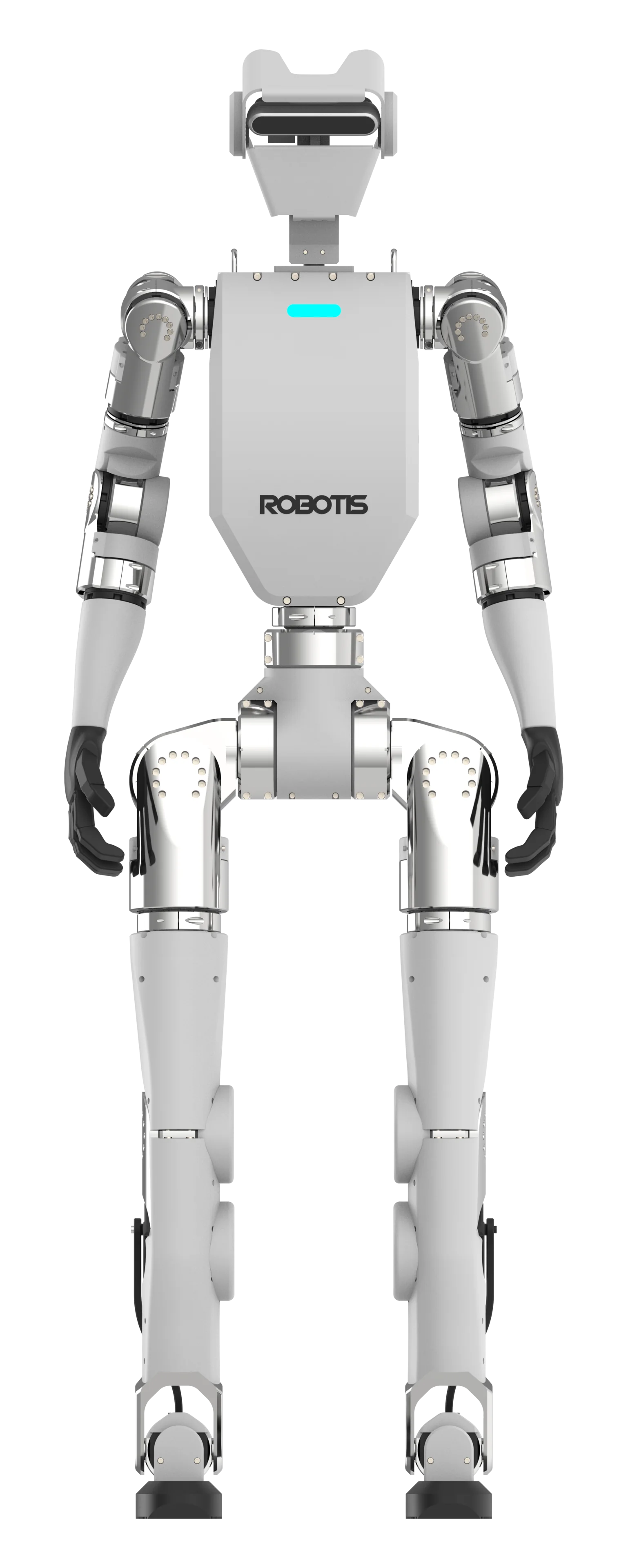
AI Sapiens is ROBOTIS's humanoid platform for developing motion, learning, and control on real hardware. It is designed so policies trained with imitation learning and reinforcement learning can move from simulation to physical deployment.
Here, Physical AI means intelligence that closes the loop across hardware, sensing, actuation, and real-world dynamics.
AI Sapiens K1 is the humanoid platform covered in this manual. Its hardware, robot software, training assets, and documentation provide the resources needed to reproduce AI Sapiens workflows in research, education, and product development.
AI Sapiens is also an end-to-end open-source project. ROBOTIS plans to share the full stack from mechanical hardware and electrical system resources to robot software, simulation assets, training workflows, and deployment guides. This gives users a clear path to study how the robot is built, modify each layer, and develop new capabilities on top of the same resources used by the platform.
Explore the AI Sapiens open-source stack
Find public repositories for robot software, simulation, motion, and learning, along with license information and planned resources.
View Open Source
See the Hardware and Software Architecture pages for detailed specifications.
Specifications, software behavior, open-source resources, and documentation content may be updated without prior notice.
Key Features
Platform for Physical AI
Documentation, simulation, and control workflows for policies that can be trained, refined, and validated against real contact and dynamics.
Fully Open-Source Platform
Hardware, electrical, software, simulation, and learning resources are organized so users can inspect, modify, and build on the complete robot stack.
Hardware-Aware Development
Motion, control, and learning workflows are documented around the real robot platform instead of only simulation examples.
Whole-Body Motion
The platform supports locomotion, upper-body motion, and sim-to-real workflows from one robot body.
Reinforcement Learning
AI Sapiens uses reinforcement learning to develop locomotion while reducing the gap between simulation and real hardware. Training is performed in NVIDIA Isaac Sim™, enabling physics-based simulation and large-scale policy iteration. By connecting simulation with physical deployment, AI Sapiens supports more stable and precise humanoid locomotion.
Imitation Learning
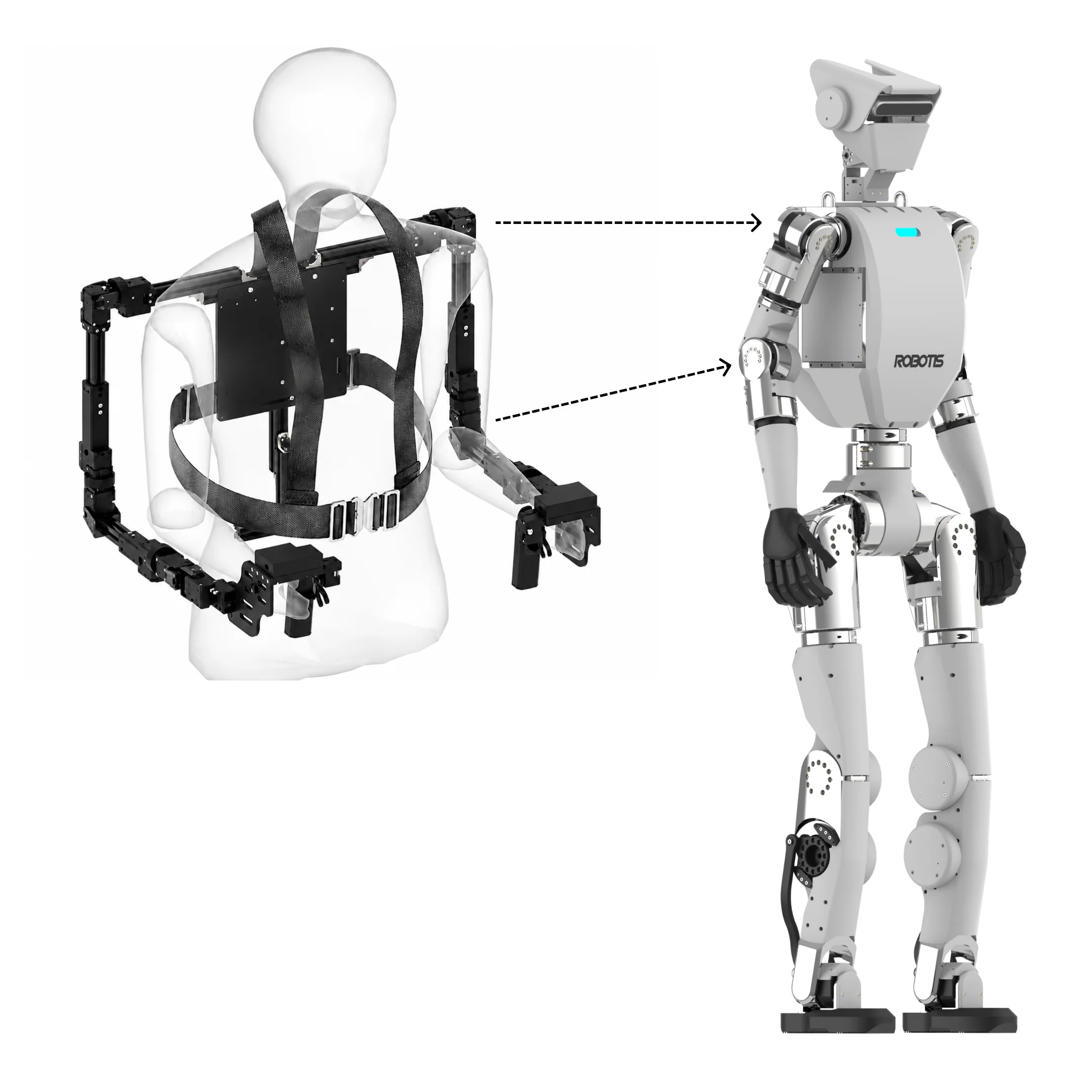
AI Sapiens includes an imitation learning workflow for data collection, training, and inference. Demonstration data can be collected through the leader-follower system, allowing human motions to be recorded and structured for learning. The workflow helps users move from demonstration data to robot behavior with fewer manual conversion steps.
Policies trained from demonstrations can then be transferred to the robot for natural, repeatable behaviors. This keeps data collection, training, and real-world execution connected, so users can iterate quickly and validate skills on hardware.
More About K1
Use the specification pages when you need concrete hardware or software details:
- Hardware: mechanical layout, actuators, compute, interfaces, power, and hardware resources.
- Software Architecture: OS, containers, ROS 2, communication, and robot-side software stack.
- Open Source: public repositories grouped by robot software, simulation, motion tools, and shared dependencies.
More Information and Questions
If you have questions or would like more information, please reach out on Discord and we will respond as quickly as possible. You can also learn more about ROBOTIS products and services there. Join our Discord